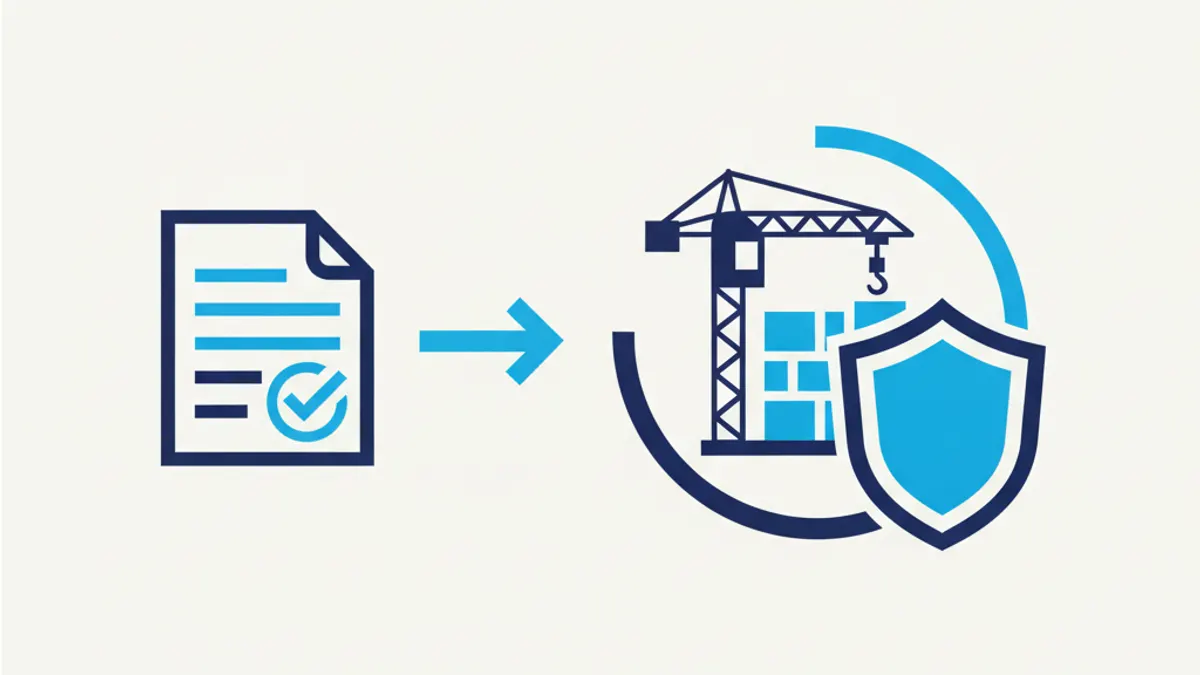
Same job, two stages
The bid bond and the performance bond are not competing choices. They are sequential. The bid bond lives during the bidding stage. The performance bond takes over once you win. On a public job you will usually provide the bid bond with your proposal, then a performance bond and a payment bond after award.
| Bid bond | Performance bond | |
|---|---|---|
| Stage | Bidding, before award | After award, during the build |
| Guarantees | You honor your bid and post the final bonds | You complete the contract |
| Typical amount | 5% to 10% of the bid | Up to 100% of the contract |
| If you fail | Surety pays the bid-spread difference | Surety completes the work or pays the owner |
| Separate premium | Usually none | Yes, a percentage of the contract |
Bid bond: stand behind your number
A bid bond guarantees that if you are the winning bidder, you will enter into the contract at your bid price and provide the required performance and payment bonds. If you win and then walk away or cannot bond the job, the surety pays the obligee the difference between your bid and the next viable bid, up to the bond amount. It protects the owner from a lowball bid that falls through.
Performance bond: deliver the work
A performance bond is issued after award and guarantees you complete the contract. If you default during the job, the surety arranges completion or compensates the owner, up to the penal sum, usually 100% of the contract value. It is paired with a payment bond that protects your subcontractors and suppliers.
Does the bid bond turn into the performance bond?
No. They are separate bonds. Winning the bid does not convert the bid bond into a performance bond. When you are awarded the job, the bid bond has done its work, and the surety issues fresh performance and payment bonds for the contract. The bid bond simply falls away.
What they cost
A bid bond usually carries no separate premium. It is issued on the strength of your bonding program, because the surety is really deciding whether it will stand behind your final bonds. The premium sits on the performance bond, priced as a percentage of the contract on a sliding scale. See our note on what a bid bond costs for more.
One capacity decision
Because the bid bond is really a promise to provide the final bonds, a surety underwrites both as a single capacity decision: can this contractor complete and pay for the job it is bidding? If bidding public work is new to you, start with how to bid public works in California. If credit or a thin track record makes the capacity hard to place, that is the kind of file we work through our hard-to-place markets.